
Why the first 2 weeks matter more than the next 2 years
First impressions with a new boss are not just social niceties — they are career-defining. A study in the Journal of Applied Psychology found that initial impressions formed in the first 2 weeks of a new manager relationship predict performance ratings 12 months later. Your new boss is forming judgments about you right now — whether you are reliable, whether you are strategic, whether you are someone they want on their team long-term.
The biggest risk is not making a bad impression. It is making no impression. Most people go passive when they get a new boss — they wait to be told what to do, they avoid being the first to reach out, they keep their head down and "let the new boss settle in." This is exactly wrong. Your new boss is drowning in information and trying to figure out who to trust. The people who reach out proactively, offer context, and make the transition easier are the ones who earn trust fastest.
The second biggest risk: assuming your new boss is like your old one. Different managers have completely different styles, priorities, and communication preferences. What worked with your previous boss (detailed email updates, weekly 1-on-1s, async Slack check-ins) may frustrate your new one. You need to learn their operating system quickly.
Day 1-3: Be the one who reaches out first
Do not wait for your new boss to schedule a 1-on-1 with everyone on the team. Be the first to reach out. Send a brief message:
"Welcome to the team. I know you are getting a lot of information right now. I would love to set up 30 minutes whenever you are ready — happy to share context on what I am working on and how I can be most useful during the transition. No rush."
This message does three things. It signals proactivity (you are not waiting to be managed). It offers value (context and help, not requests). And it gives them control ("whenever you are ready").
Prepare a one-page brief about yourself. Before the first meeting, have ready: your current responsibilities, top 3 priorities for the quarter, your key stakeholders, and any open issues they should know about. Keep it to one page. Your new boss is meeting 5-15 people in the first week — the person who makes it easiest to understand their world wins.
Do NOT immediately dump problems. The worst thing you can do in the first meeting is list everything that is broken. Your new boss is overwhelmed already. Save the problems for week 2 or 3. In week 1, be a source of clarity, not stress.
Day 4-7: Learn their operating system
Every boss has an operating system — their preferred communication style, meeting cadence, decision-making approach, and hot buttons. Your job in the first week is to decode it.
Ask directly: "What is your preferred way to get updates — email, Slack, or in 1-on-1s?" "How often would you like to check in?" "When something goes wrong, do you want to know immediately or do you want me to handle it and brief you after?" These questions save months of trial and error.
Observe their behaviour. Do they respond to emails within minutes or batch them? Do they prefer structured agendas or free-flowing conversation? Do they ask detailed questions or stay at the strategic level? The answers tell you how to communicate with them.
Use the management style framework. Is your new boss a Direction type (results-first, decisive, wants independence)? An Exception type (process-oriented, intervenes only when things deviate)? An Enablement type (trust-based, team-development focused)? A Participation type (consensus-driven, wants input before decisions)? Adapt your communication style to match theirs — not the other way around.
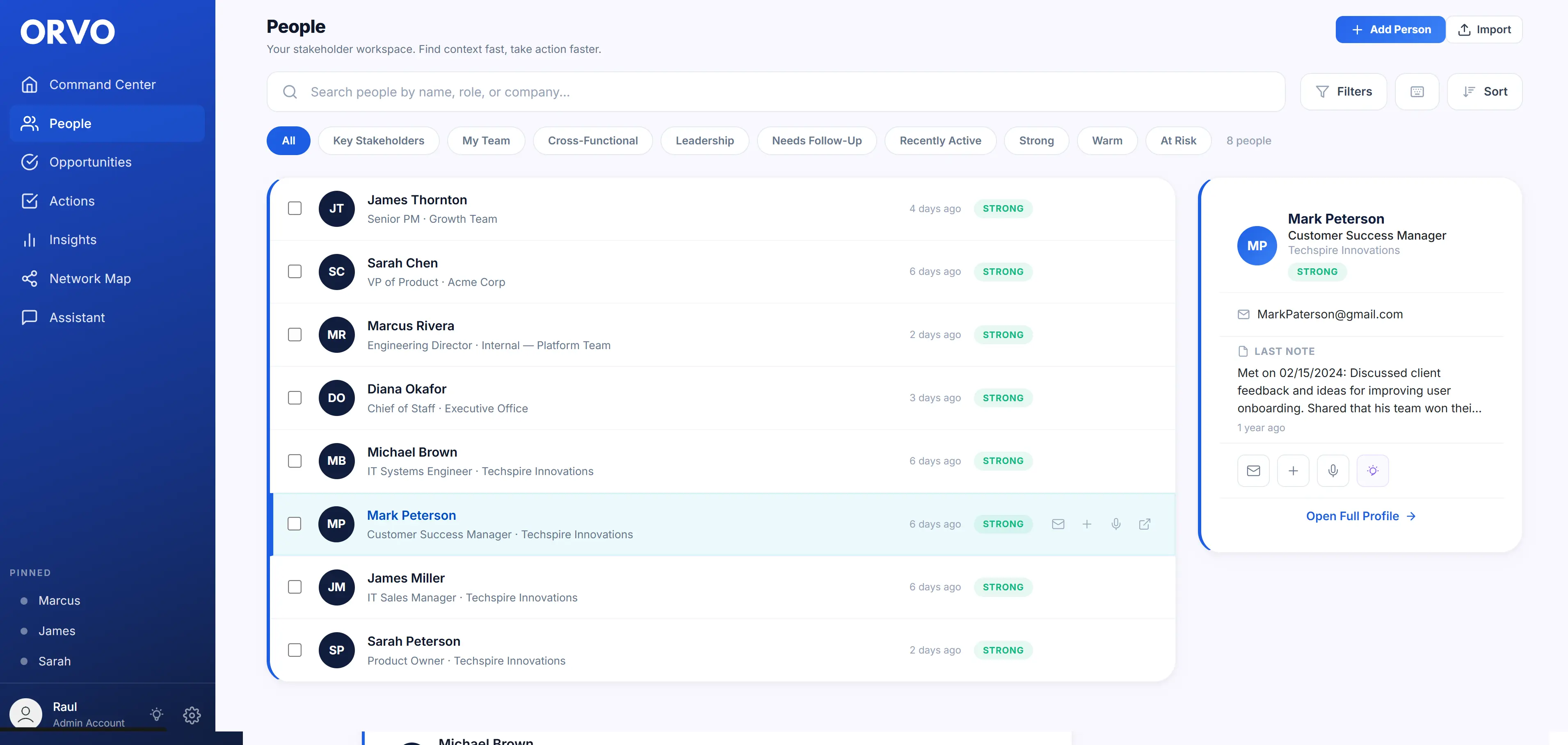
Log everything. Start a profile for your new boss in your relationship management tool. Note their communication preferences, priorities, hot buttons, and management style. This becomes your cheat sheet for every future interaction. Orvo is built for exactly this — track stakeholder preferences and review them before meetings.
| Question to Ask | What It Tells You | How to Adapt |
|---|---|---|
| How do you prefer updates? | Communication channel preference | Match their channel — do not force yours |
| How often should we check in? | Their management cadence | Propose a rhythm, let them adjust |
| What is your top priority right now? | Where to focus your effort | Align your work to their priority |
| When things go wrong, what do you want? | Their risk tolerance | Escalate early (Direction) or handle first (Exception) |
| What frustrated you about previous teams? | Their hot buttons | Avoid those specific behaviours |
Day 8-14: Build trust through small wins
Trust with a new boss is built through repeated small demonstrations, not one big gesture. In the second week, focus on quick wins that show reliability.
Deliver something early. Find one small task or initiative you can complete and share in the second week. Not a vanity project — something your new boss mentioned caring about. If they said their priority is customer retention, surface a quick analysis of churn drivers. If they said they want better team communication, propose a lightweight standup format. The goal is to show: I listened, I acted, I delivered.
Close the loop on everything. When your new boss asks you a question — even casually — follow up with an answer. When they mention something they want to look into, send them the relevant document without being asked. This loop-closing behaviour is the single fastest trust-builder with any manager. It signals reliability.
Be the translator. Your new boss does not understand the organisational context yet. You do. Be the person who explains: who the key stakeholders are, where the political landmines are, what the team's history is with other teams. This is not gossip — it is strategic context. Frame it factually: "The relationship between our team and Product has been tense since the Q2 reorg. Here is what I think happened and where it stands now."
Offer the network map. If you use Orvo or any stakeholder mapping tool, offer to walk your new boss through the key relationships in the team and across the org. This is an incredibly high-value gesture — you are literally giving them the map to navigate their new world.
What NOT to do (the mistakes that damage new boss relationships)
Avoiding mistakes is as important as making good moves. Here are the five most common mistakes people make with a new boss.
1. Comparing them to your old boss. Never say "my previous manager did it this way." Even if true, it signals that you are not adapting. Your new boss does not care how things used to be done — they care about how things will be done now.
2. Dumping problems in week 1. Your new boss cannot process organisational complexity in their first week. If you lead with "everything is broken," they will associate you with negativity. Wait until week 2-3, then present problems with proposed solutions.
3. Going passive. Waiting to be told what to do, reducing your output, "giving them space." This is the opposite of what your new boss needs. They need clarity, proactivity, and people they can rely on immediately.
4. Trying to become their best friend. The first 2 weeks are about professional trust, not personal friendship. Be warm but focused. The relationship will deepen naturally over time. Forcing intimacy early creates discomfort.
5. Ignoring the change. Pretending nothing happened. Continuing exactly as before without acknowledging that the relationship is new and needs to be built. Every manager transition is a relationship reset — treat it like one.
A relationship begins the way it is going to proceed. Make the first 2 weeks count.
New boss? Start the relationship right. Orvo helps you track their preferences, prepare for every 1-on-1, and build trust systematically — free trial, no credit card.
Get Orvo FreeKey Takeaways
- ✓ First impressions with a new boss predict performance ratings 12 months later — the first 2 weeks matter enormously
- ✓ Be the first to reach out. Prepare a one-page brief. Offer context and help, not problems
- ✓ Learn their operating system: communication style, meeting cadence, decision-making approach, and hot buttons
- ✓ Build trust through small wins: deliver early, close every loop, be the organisational translator
- ✓ Never compare them to your old boss, dump problems in week 1, or go passive during the transition
- ✓ Log their preferences in a relationship management tool — this becomes your cheat sheet for every future interaction