
Why corporate feels like a different planet
University teaches you to succeed individually. Corporate requires you to succeed through other people. That single shift explains 90% of the confusion Gen Z professionals feel in their first 1-3 years.
In school, the rules were explicit: complete the assignment, score well on the exam, earn the grade. In corporate, the rules are implicit: build the right relationships, create visibility with the right people, and make others look good — especially the people who decide your future. A Gallup study found that 70% of the variance in employee engagement is determined by the quality of the manager relationship. Not the work. Not the company. The relationship.
This does not mean corporate is fake or political. It means that your technical skills get you in the door, but your relationship skills determine how far you go. LinkedIn data shows that 85% of jobs are filled through networking. Internal promotions work the same way — they are influenced by who knows you, who advocates for you, and whether decision-makers can picture you at the next level.
The good news: you are entering the workforce at a time when systematic relationship management tools exist. Previous generations had to keep everything in their heads. You can use a system.
Rule 1: Your work does not speak for itself
This is the hardest rule for high-performing Gen Z professionals to accept. You were taught that merit wins. In corporate, visibility wins.
Here is what actually happens: you do excellent work. Your manager knows. Their manager does not. When promotion discussions happen, your manager advocates for you — but they are competing against 5 other managers advocating for their people. The decision-makers have never seen your work. They go with the name they recognise.
The fix is not self-promotion in the cringe LinkedIn influencer way. It is strategic visibility:
- Share wins in context. "The team shipped X, which impacted Y metric by Z%" — not "I am proud to announce..."
- Volunteer for cross-functional projects that put you in front of leaders outside your team.
- Build a skip-level relationship. Your manager\'s manager should know your name and what you deliver.
- Document your accomplishments. Keep a running list of wins with dates and metrics. When review season comes, you will have evidence instead of vague memories.
Marcus Aurelius wrote: "Waste no more time arguing about what a good man should be. Be one." True — but in corporate, also make sure the right people see it.
Rule 2: Relationships are the operating system of every organisation
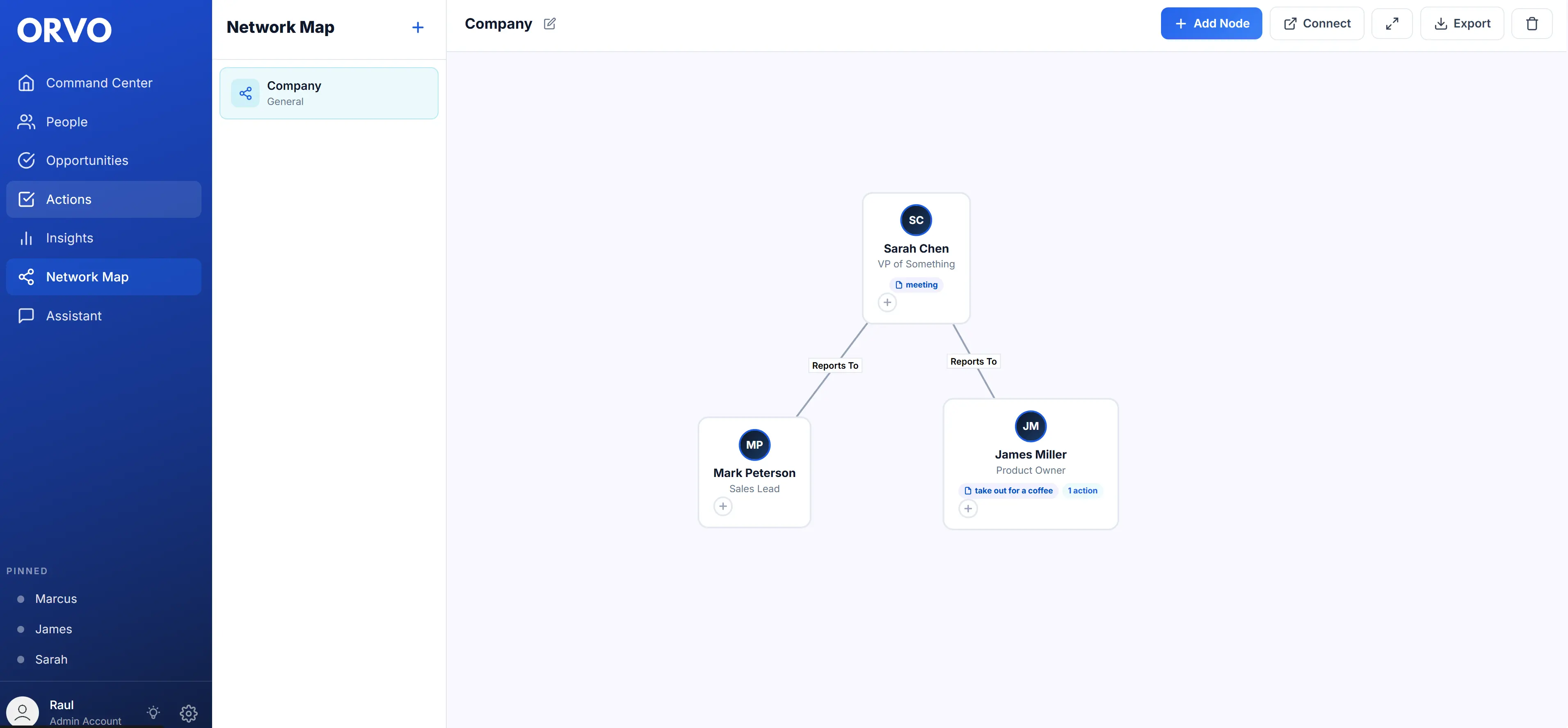
Every organisation has two structures. The org chart (who reports to whom) and the influence map (who actually makes things happen). They are rarely the same.
The EA who controls the VP\'s calendar has more practical power than most directors. The engineer who built the original system has more influence over technical decisions than the CTO. The finance analyst who prepares the budget deck shapes strategy more than most strategy consultants.
Your job in the first 2 years is to learn the influence map. Who are the real decision-makers? Who controls access? Who gets consulted before big changes? Who has informal authority that exceeds their title?
Dale Carnegie\'s principle from 1936 still holds: become genuinely interested in other people. Not transactionally — genuinely. Ask questions. Listen. Remember what they tell you. Follow up. The professional who remembers that their colleague\'s daughter just started university builds more trust in 30 seconds than the one who sends 10 status updates.
The challenge for Gen Z: your generation communicates primarily through async digital channels (Slack, text, social media). Corporate still runs on synchronous relationship building — meetings, 1-on-1s, hallway conversations, and coffee chats. You do not need to love it, but you do need to do it. Treat it as a skill to develop, not a personality trait you lack.
Practical step: use a relationship management tool like Orvo to track your stakeholders — their priorities, communication style, last interaction, and what you committed to. This turns relationship management from a memory exercise into a system. Previous generations could not do this. You can.
Rule 3: Learn the systems that govern your world
Corporate life is governed by systems — budgeting cycles, performance review processes, promotion calibration, project prioritisation, headcount planning. Most early-career professionals are oblivious to these systems and therefore cannot navigate them.
Here is what to learn in your first year:
1. How promotions actually work. Is there a calibration committee? Who sits on it? When do they meet? What criteria do they use? Most companies have a process — but nobody explains it to new hires. Ask your manager. If they do not know, ask HR.
2. How budgets are allocated. Understanding money flow tells you where the company is investing, which teams will grow, and where the opportunities are. You do not need to read the full P&L — just understand which initiatives have budget and which do not.
3. How decisions get made. In every organisation, there is a formal process (proposal → review → approval) and an informal one (hallway conversation → pre-alignment → rubber stamp). The informal process is where real decisions happen. Learn it by observing how senior people operate.
4. What frameworks the company uses. Prince2, ITIL, PMBOK, BABOK, Agile, OKRs — every corporate environment has frameworks that govern how work gets done. In your first coaching session at any job, the most valuable thing you receive is not advice — it is awareness that these frameworks exist so you can research them yourself.
5. How performance is measured. Not the formal KPIs — the informal signals. What behaviour gets rewarded? What gets ignored? What gets punished? Watch who gets promoted and reverse-engineer why.
Rule 4: Energy management matters more than time management
Every productivity article tells you to manage your time. Better advice: manage your energy. You have a limited amount of cognitive and social energy each day. How you spend it determines your effectiveness.
This is especially important for introverts — and Gen Z skews more introverted than previous generations. Groups drain your battery. Back-to-back meetings drain your battery. Open offices drain your battery. This is not a weakness — it is a fact of your cognitive architecture.
The strategic response: be deliberate about where you spend energy.
Choose your meetings carefully. Not every meeting requires your full attention. The 1-on-1 with your skip-level? Maximum energy. The recurring team standup? Autopilot is fine.
Build recovery time into your day. 30 minutes of solo work between meetings. A walk at lunch. A wind-down ritual at the end of the day. These are not luxuries — they are performance tools.
Invest energy in the relationships that matter. You cannot be best friends with everyone. Pick the 15-20 stakeholders who most influence your work and career, and invest your energy there. Use Orvo to track them so you do not waste energy on relationships that do not move the needle.
The INTJ community has a useful framing: "Be strategic about your social world. Do not make useless connections. Save energy for the interactions that create advantage. Pursue the relationships you can be decisive about." This applies to every personality type in corporate — not just introverts.
The Gen Z career toolkit: systems that compound
Previous generations navigated corporate with memory, instinct, and a Rolodex. You have better tools. Use them.
A relationship management system. Track the people who matter to your career — their priorities, communication preferences, last interaction, and open commitments. Orvo is built for this. After 6 months of consistent use, you will have a richer understanding of your professional network than most people develop in 10 years.
A learning system. Identify the skills and frameworks your industry values (ITIL, Agile, OKRs, financial modelling — whatever applies to your field) and systematically build competence. Do not wait for your company to train you. The most valuable coaching session in any early career is the one that opens your eyes to what frameworks exist — then you go learn them yourself.
A visibility system. Track your wins with dates and metrics. Send concise impact updates to stakeholders monthly. Prepare for every important meeting with context and questions. This is not self-promotion — it is professional communication.
A reflection system. Once a quarter, audit your career: Which relationships are strong? Which have gone cold? What skills have you developed? What is your biggest gap? What is your next move? This takes 30 minutes and prevents the slow drift into complacency that stalls most careers.
The compounding effect is real. After 12 months of using these systems, you will have more organisational intelligence, stronger stakeholder relationships, and better visibility than colleagues who have been there 5 years — because you were systematic and they were not.
Your generation has been told that loyalty to a company is dead. Maybe. But loyalty to a system of personal development is not. Build the system. Let it compound. The career takes care of itself.
Start building your career system today. Orvo gives you relationship management, stakeholder mapping, and AI meeting prep — free trial, no credit card.
Get Orvo FreeKey Takeaways
- ✓ Corporate success runs on relationships, not just performance — 85% of jobs are filled through networking
- ✓ Your work does not speak for itself. Strategic visibility with the right stakeholders determines who gets promoted
- ✓ Learn the influence map (not just the org chart) and the systems that govern promotions, budgets, and decisions
- ✓ Manage your energy, not just your time — invest social energy in the 15-20 relationships that matter most
- ✓ Build systems that compound: relationship tracking, learning, visibility, and quarterly career audits
- ✓ You have tools previous generations did not — use them to build organisational intelligence faster than anyone