
The first 48 hours: what to do (and what NOT to do)
The first 48 hours after a bad review are the most dangerous. Your emotional brain is in control, and every instinct it offers is wrong.
Do NOT respond immediately. Do not send a rebuttal email. Do not confront your manager. Do not vent in Slack or to colleagues. Everything you say in the first 48 hours will be driven by emotion, and emotional responses to performance feedback almost always make the situation worse. A 2024 study by the Center for Creative Leadership found that professionals who responded to negative feedback within 24 hours were 3x more likely to damage the relationship with their manager than those who waited 48-72 hours.
Do NOT quit. The urge to resign is strongest right after a bad review. Resist it. Quitting after a bad review means leaving from a position of weakness — with a gap on your resume, no references from your current manager, and the emotional baggage of feeling like you failed. The Strategic Stay (if needed) starts here.
Do NOT tell everyone. Confide in one trusted person outside work — your partner, a mentor, a close friend. Do not broadcast the review to colleagues. Office information travels fast, and being known as the person who "got a bad review" adds social pressure to an already difficult situation.
DO: Process the emotion. Give yourself permission to be upset. A bad review triggers the same neurological response as a physical threat — your brain interprets it as a survival issue. Go for a walk. Exercise. Write in a journal. Sleep on it. The goal is not to suppress the emotion but to let it pass through you before you take any action.
DO: Request a copy. If you did not receive a written copy of the review, ask your manager or HR for one. You need the exact language to work with — not your emotional memory of the conversation. Most people misremember negative feedback as worse than it actually was.
DO: Schedule a follow-up meeting. Before you leave the review conversation, say: "Thank you for the feedback. I want to take some time to process this and then I would like to schedule a follow-up conversation to discuss a plan for improvement. Can we meet in about a week?" This signals maturity, not weakness. It tells your manager you are taking the feedback seriously without being reactive.
DO: Separate the review from your identity. A bad review evaluates a period of performance. It does not evaluate you as a person, your entire career, or your potential. This distinction matters. The most successful professionals treat performance reviews as data about a specific time period — useful but not defining. Your career is a body of work spanning decades. One review is a single data point in a long series. Treating it as a verdict rather than an input is the most common emotional trap, and it leads to either spiralling self-doubt or defensive denial. Neither helps your recovery.
Day 3-7: Separate signal from noise
Once the initial emotional wave passes, it is time to analyse the review objectively. Not every piece of negative feedback is equally valid or equally important. Your job is to separate the signal (feedback that is accurate and actionable) from the noise (feedback that is subjective, political, or based on incomplete information).
Read the review with a highlighter. Go through the written feedback and categorise every point into three buckets:
Bucket 1: Fair and specific. Feedback that cites specific examples, is measurable, and feels accurate when you are honest with yourself. "You missed three project deadlines in Q3" or "Your stakeholder updates lack the financial detail the CFO requires." This is the signal. This is where your recovery plan focuses.
Bucket 2: Fair but vague. Feedback that may be accurate but is not specific enough to act on. "You need to be more strategic" or "Your communication could be stronger." This needs clarification — you will ask for specific examples in your follow-up meeting.
Bucket 3: Unfair or political. Feedback that does not match the evidence, reflects a personal conflict, or seems to be influenced by factors unrelated to your actual performance. "You are not a culture fit" when you consistently deliver results, or criticism for decisions your manager approved. This requires a different approach — documentation, not argument.
Ask yourself three honest questions:
1. "If my best friend gave me this same feedback, would I agree?" This removes the manager relationship from the equation and lets you evaluate the content independently.
2. "Have I heard anything similar before — from anyone?" If multiple people have given you similar feedback over the years, it is almost certainly signal, not noise.
3. "What would I tell a mentee who received this feedback?" This creates distance and lets you advise yourself more objectively.
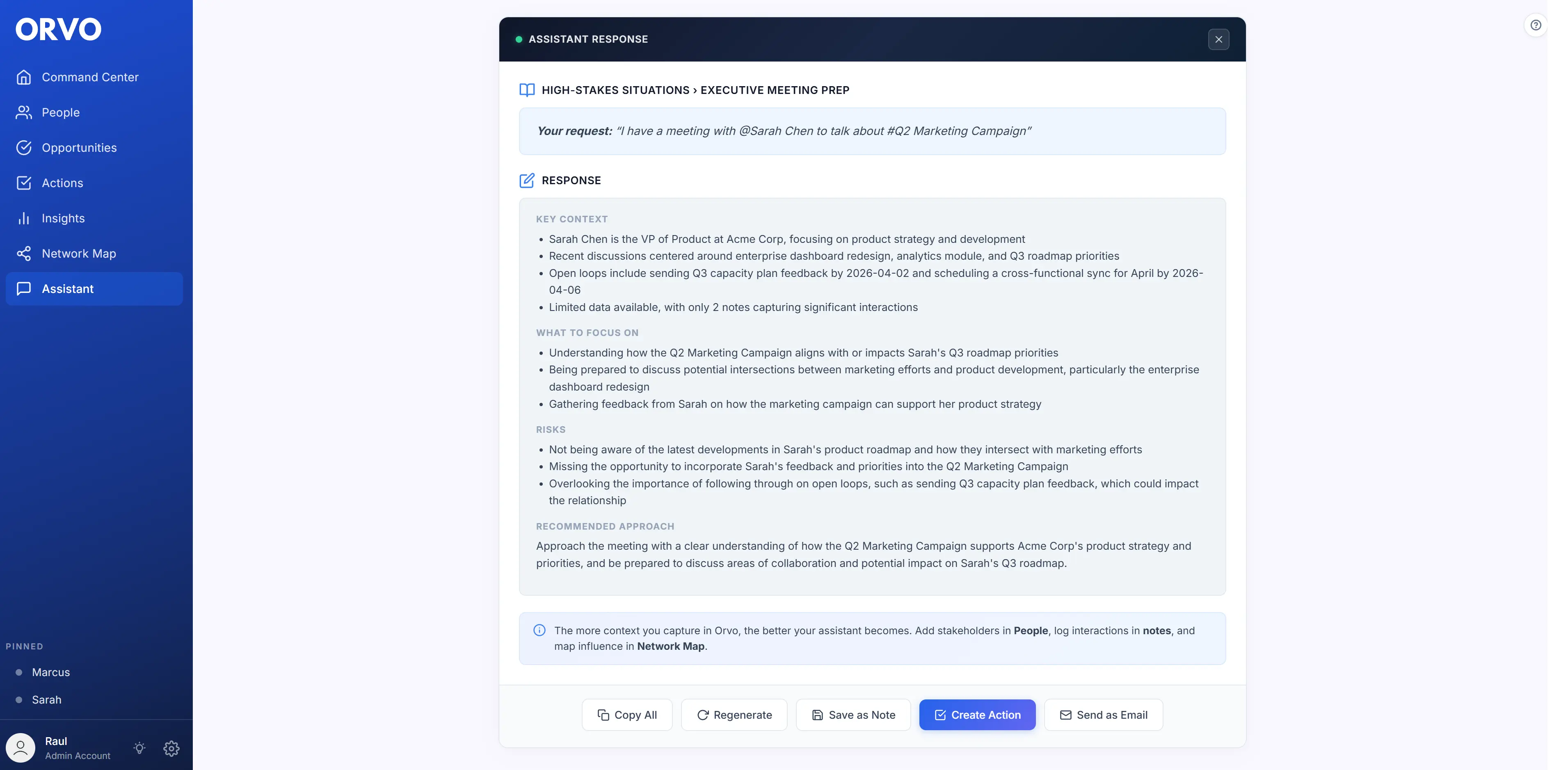
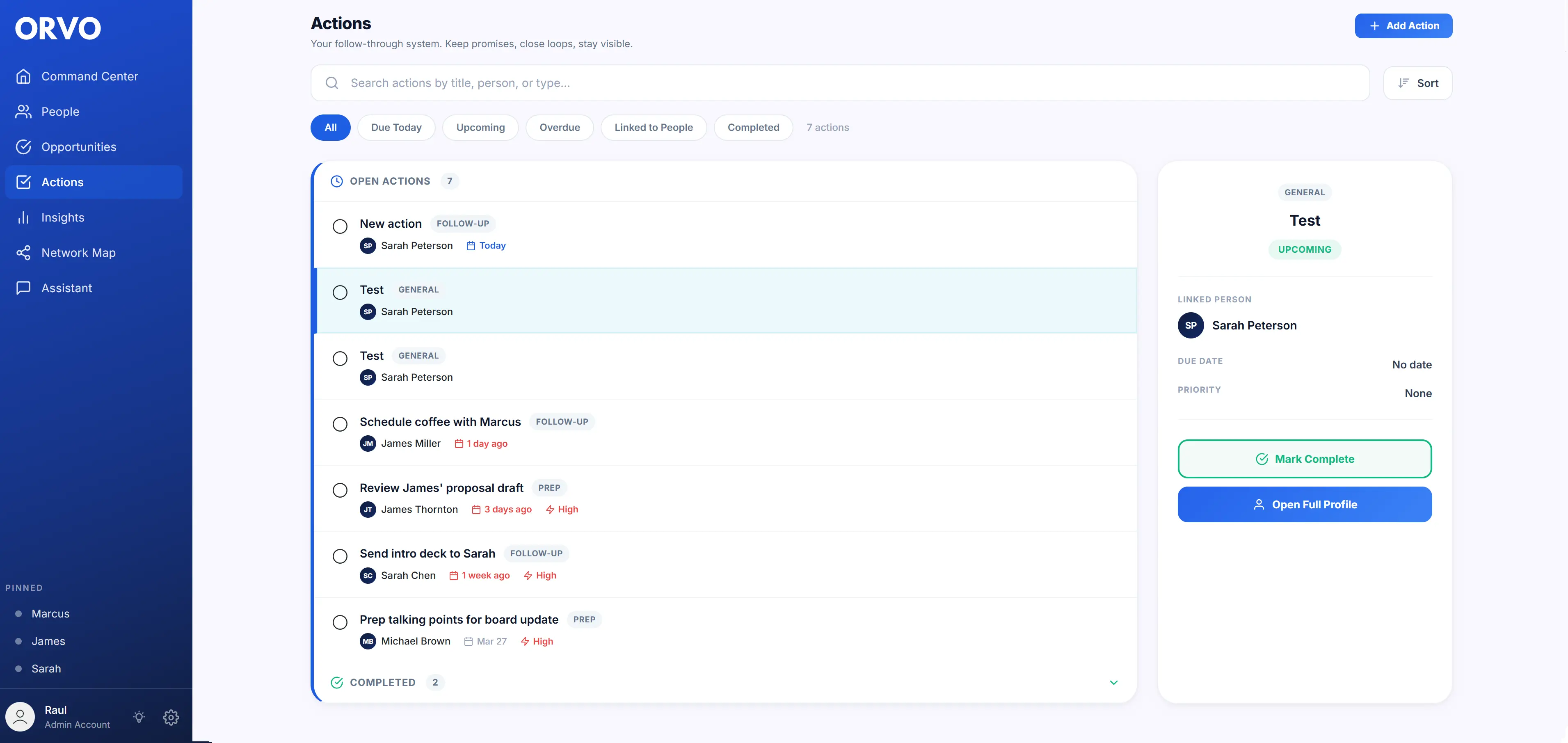
Document everything. Create a private document with the specific feedback points, your honest assessment of each, and any evidence that supports or contradicts the feedback. This document becomes your recovery roadmap. Track it in Orvo alongside your stakeholder notes — because your recovery is fundamentally a relationship rebuilding exercise with your manager.
| Feedback Type | Example | Your Response | Action |
|---|---|---|---|
| Fair and specific | "Missed 3 deadlines in Q3" | Acknowledge and own it | Build a concrete plan to prevent recurrence |
| Fair but vague | "Need to be more strategic" | Ask for specific examples | Request clarity in follow-up meeting |
| Unfair or political | "Not a culture fit" (despite results) | Document with counter-evidence | Address diplomatically or escalate if needed |
The follow-up meeting: how to turn feedback into a recovery plan
The follow-up meeting with your manager — ideally 5-7 days after the review — is the most important conversation in your recovery. How you show up here determines whether your manager sees you as someone who is taking ownership or someone who is in denial.
The structure that works:
1. Lead with acknowledgment (2 minutes). "Thank you for the honest feedback. I have spent the last week reflecting on it seriously. There are areas where I agree the performance was not where it should have been, and I want to talk about my plan to address them."
This is disarming. Most managers expect defensiveness after a bad review. Leading with acknowledgment immediately shifts the dynamic from adversarial to collaborative.
2. Show you did the work (5 minutes). Walk through the specific feedback points you agree with, and share what you believe caused the performance gap. Be honest but not self-flagellating. "I missed deadlines in Q3 because I overcommitted to three initiatives simultaneously and did not communicate the capacity issue early enough. That was my mistake."
3. Present your recovery plan (10 minutes). For each specific piece of feedback, present a concrete action you will take. Not vague commitments ("I will try harder") but specific, measurable changes:
- "I will reduce my active projects from 5 to 3 and send you a weekly priority update every Monday."
- "I will prepare a financial summary for every stakeholder update, and I would like your feedback on the first two."
- "I will schedule a monthly skip-level with [VP] to build the executive visibility you mentioned."
4. Ask for ongoing feedback (3 minutes). "I do not want to wait until the next review cycle to know how I am doing. Can we check in on these specific areas every two weeks?"
This request does two things: it gives you early warning if you are still off track, and it gives your manager evidence of your improvement in real time — not six months later when memories have faded.
5. Clarify the vague feedback (5 minutes). For the Bucket 2 feedback (fair but vague), ask for specifics: "You mentioned I need to be more strategic. Can you give me one or two examples of what strategic looks like in my role, or a situation where I was not strategic enough?" Most managers will give you useful specifics when asked directly.
What to do about Bucket 3 (unfair feedback): If there is genuinely unfair feedback, address it calmly and with evidence. "I want to share some context on [specific point]. Here is what happened and the evidence I have." Do not be combative. Present the facts and let them speak. If the feedback is rooted in personal conflict rather than performance, consider whether an HR conversation or a skip-level is appropriate — but only after you have addressed the valid feedback first.
The 30-day recovery sprint: visible improvement on the exact dimensions flagged
The first 30 days after the follow-up meeting are your recovery sprint. The goal is not to become a different person — it is to demonstrate visible, measurable improvement on the specific dimensions your manager flagged.
Week 1-2: Quick wins. Find 1-2 improvements you can demonstrate immediately. If the feedback was about missed deadlines, deliver something early. If it was about stakeholder communication, send a polished update your manager can see. If it was about strategic thinking, share an insight or analysis that shows you are thinking beyond your immediate tasks.
Week 2-3: Systematic change. Implement the structural changes from your recovery plan. If you committed to reducing active projects, do it and communicate the change. If you committed to weekly priority updates, send the first two and ask for feedback.
Week 3-4: Relationship repair. A bad review often damages trust between you and your manager. Trust is rebuilt through consistent small actions. Close the loop on every request. Follow up on every commitment. Be reliable on the small things.
Use Orvo to track your manager relationship during this period. Log every conversation, note their reactions to your improvements, track what resonates. Your manager is your most critical stakeholder right now.
| Week | Focus | What to Deliver | Why It Matters |
|---|---|---|---|
| Week 1-2 | Quick wins | 1-2 visible improvements on flagged areas | Creates momentum — manager sees immediate change |
| Week 2-3 | Systematic change | Structural process changes from your plan | Shows you are addressing root causes, not symptoms |
| Week 3-4 | Relationship repair | Consistent reliability on every commitment | Rebuilds the trust the bad review eroded |
What your manager is actually thinking (and how to use that knowledge)
Understanding your manager's perspective during and after a bad review gives you a strategic advantage in recovery. Most professionals are so consumed by their own emotional response that they never consider what is happening on the other side of the table.
Giving bad reviews is uncomfortable for managers too. A 2024 survey by the Society for Human Resource Management found that 63% of managers describe giving negative performance feedback as one of the most stressful parts of their job. Your manager likely agonised over the wording, worried about your reaction, and may have been coached by HR on how to deliver it. They are not enjoying this.
Your manager wants you to succeed. Unless the review is a prelude to termination (which is usually obvious from the presence of HR or a formal PIP), your manager gave you negative feedback because they want you to improve. A manager who has given up on you does not invest the emotional energy of a difficult conversation — they simply manage you out. The fact that they gave you specific feedback is, paradoxically, a sign they are still invested.
Your manager is watching for your response. This is the critical insight. The 48-72 hours after a bad review are when your manager is most attentive to your behaviour. They are watching for signs: Will this person be defensive? Will they shut down? Will they be passive-aggressive? Or will they show maturity? Your response during this window disproportionately shapes their perception of your recovery potential.
Your manager is also worried about the relationship. Most managers know that a bad review can damage the working relationship. They may be awkward around you for a few days. They may over-explain or over-compensate. This is normal. The professional who proactively normalises the relationship — showing up with the same professionalism as before, not making it weird — actually relieves their manager's anxiety and accelerates relationship repair.
Your manager talks to other managers. In calibration sessions, your manager advocates for (or against) your rating. If you respond to a bad review with ownership and a concrete plan, your manager has a story to tell: "They took the feedback seriously and here is what they have done about it." If you respond with defensiveness or disengagement, your manager's story is: "They did not take it well." Which story do you want told?
How to use this knowledge:
1. In the first 48 hours: Do nothing reactive. Your manager is watching and expecting defensiveness. Surprise them with composure. 2. In the follow-up meeting: Lead with ownership. Your manager is prepared for a difficult conversation. Make it easy for them — they will remember this. 3. In the 30-day sprint: Over-communicate your progress. Your manager needs evidence to update their narrative about you. Give them ammunition. 4. In the 90-day reset: Help your manager look good. When you improve visibly, your manager looks like someone who develops talent. That is valuable to them — and it gives them a reason to champion your recovery.
The psychology of bad reviews: why they hit so hard and how to use it
Understanding why bad reviews are so emotionally devastating helps you process them faster and respond more strategically.
Identity threat. A bad review attacks your professional identity — your sense of yourself as competent, valuable, and respected. Psychologist Adam Grant's research shows that people who tie their identity to their work ("I am a great PM") experience negative feedback as an existential threat, while people who tie their identity to their growth ("I am someone who gets better") experience it as useful information. The reframe: you are not a great performer who failed. You are a growing professional who received data.
Negativity bias. Your brain is wired to weigh negative information more heavily than positive information — a survival mechanism that helped our ancestors but sabotages our careers. A review that is 80% positive and 20% negative will feel like it was 50/50 or worse. This is why requesting a written copy is so important — when you read it a week later, you will often discover it was less severe than you remembered.
Attribution error. When you get a good review, you attribute it to your skills and effort (internal). When you get a bad review, you attribute it to your manager's bias, unfair circumstances, or bad luck (external). The truth is usually somewhere in the middle. Force yourself to ask: what is the internal explanation? What did I actually do or not do that contributed to this outcome?
Social comparison. A bad review feels worse when you perceive that peers received better ones. But you rarely have accurate information about others' reviews — people share good reviews and hide bad ones. Research from Wharton shows that 32% of professionals have received at least one significantly negative review during their careers. You are not uniquely failing. You are experiencing something that one in three professionals has navigated.
The hidden advantage of a bad review. Counterintuitively, recovering well from a bad review can strengthen your career more than never getting one. The professionals who demonstrate ownership, build a recovery plan, and show visible improvement earn a specific kind of trust: the trust that comes from watching someone handle adversity with maturity. Managers remember who fell apart after criticism and who grew from it. The second group gets harder assignments, more responsibility, and stronger advocacy — because they have proven they can handle pressure.
This is not toxic positivity. A bad review is genuinely painful. But processing the psychology — understanding why it hurts so much and why the pain is not proportional to the reality — helps you move from emotion to action faster.
The 90-day reset: from recovery to reputation rebuild
If the 30-day sprint stops the bleeding, the 90-day reset rebuilds your professional reputation. A bad review creates a narrative about you that can spread. Your job in months 2-3 is to replace it.
Broaden your visibility beyond your manager. Build relationships with other stakeholders who can observe your work: your manager's peers, skip-level leaders, cross-functional partners. When your manager sits in a calibration meeting and says your performance is mediocre, having a VP say "Actually, I have been really impressed with their work" changes the conversation.
Seek a champion. Identify one senior person — not your manager — who can speak to your work quality. Invest in this relationship by delivering excellent work they see directly.
Request a mid-cycle check-in. At the 60-day mark, ask your manager: "Can we do a quick check-in on how you are seeing the progress?" This gives you an early read and demonstrates commitment.
Prepare the counter-narrative. By day 90, compile concrete evidence of improvement: deadlines met, stakeholder feedback received, skills developed. Create a brief self-assessment that says: "Here is where I was 90 days ago, here is where I am now, and here is where I am heading."
The long game: One bad review in a career full of strong ones is a blip. Two in a row is a pattern. Your goal is to ensure this is a one-time data point that you visibly recovered from.
If you are put on a PIP: the survival and decision framework
A Performance Improvement Plan is the most feared document in corporate life. But a PIP is not automatically a death sentence. In some companies, PIPs are genuine improvement tools. In others, they are legal paperwork before a termination. Knowing which one you are dealing with determines your response.
Signs the PIP is genuine (they want you to succeed):
- Your manager seems invested in your success and offers specific support
- The goals are achievable within the stated timeframe
- The company has a history of people completing PIPs and continuing to grow
- HR is not involved in every meeting (informal tone)
- Your manager gives you positive feedback when you show improvement
Signs the PIP is a formality (they are managing you out):
- The goals are vague, subjective, or unrealistically aggressive
- HR is present at every check-in
- You are being excluded from projects, meetings, or team activities
- Your manager's tone is clinical rather than supportive
- Colleagues are being reassigned your responsibilities
If the PIP is genuine: Treat it as an intensive version of the 30-day recovery sprint. Address every specific point. Over-communicate progress. Document everything. Request weekly check-ins. Build relationships with other stakeholders who can vouch for your improvement. Most genuine PIPs last 30-90 days — use every day.
If the PIP is a formality: Activate the Strategic Stay immediately. Start your external job search now. Negotiate your exit terms — in many companies, you can negotiate a severance package, a neutral reference, and extended benefits in exchange for a clean departure. Consult an employment attorney if you believe the PIP is discriminatory or retaliatory.
Regardless of the type: Document your progress meticulously. Meet every milestone on the PIP. Build external options in parallel. A PIP — whether genuine or not — is a signal that your position is at risk, and having external options gives you leverage and peace of mind.
Track every PIP-related interaction in Orvo: what your manager said, what HR communicated, what milestones you hit, and what feedback you received. This documentation protects you legally and gives you a clear record if you need to dispute the process later.
| Signal | Genuine PIP | Formality PIP |
|---|---|---|
| Manager's tone | Supportive, invested | Clinical, detached |
| Goals | Specific, achievable, time-bound | Vague, subjective, or unrealistic |
| HR involvement | Minimal — manager-driven | Present at every meeting |
| Team dynamics | Normal workload and inclusion | Responsibilities being reassigned |
| Your response | Full recovery sprint — address every point | Strategic Stay + external job search + negotiate exit |
What if the review was genuinely unfair
Sometimes a bad review is not about your performance — it is about your manager's bias, a political dynamic, or a systemic issue. Here is how to address it without destroying your career.
Document, do not argue. Collect specific evidence that contradicts the unfair feedback: emails showing completed work, metrics, stakeholder messages. Build a fact-based case.
Start with your manager. Present evidence calmly in your follow-up meeting. Give them the opportunity to reconsider before escalating.
If your manager does not budge, consider HR or skip-level. Frame it as seeking clarity: "I want to ensure the review process is fair. There are specific points I believe are not supported by the evidence."
Know the difference between unfair and disappointing. A review that is accurate but harsher than expected is disappointing, not unfair. Before escalating, pressure-test your belief with a trusted mentor.
When to consider leaving. If the bad review is part of a pattern of unfair treatment, the Strategic Stay playbook applies. Start building your exit runway while maintaining professionalism.
Recovery starts with managing the relationship. Orvo tracks every stakeholder interaction — what your manager cares about, what your skip-level expects, and who champions your work. Start free →
Get Orvo FreeWichtige Erkenntnisse
- ✓ Do NOT respond emotionally in the first 48 hours. Process first, plan second, act third.
- ✓ Separate feedback into three buckets: fair and specific (act on it), fair but vague (clarify it), unfair or political (document it)
- ✓ The follow-up meeting is the most important conversation. Lead with acknowledgment, present a concrete plan, ask for ongoing feedback.
- ✓ The 30-day sprint: quick wins first, then systematic change, then relationship repair.
- ✓ The 90-day reset: broaden visibility, find a champion, create a counter-narrative with evidence of growth.
- ✓ Track your manager relationship like the critical stakeholder it is during recovery.
- ✓ One bad review is a data point. How you respond determines whether it becomes a blip or a pattern.