
Why most job searches fail (and what actually works)
The average job search takes 3 to 6 months. But that average hides a brutal distribution: some people land roles in weeks through warm introductions, while others spend a year submitting hundreds of applications into a void. The difference is almost never talent or experience. It is strategy.
The traditional approach — polish resume, search job boards, submit applications, wait — has a success rate of roughly 2-5% per application. That means you need to apply to 50-100 positions to get a handful of interviews. Compare that to referral-based hiring, where candidates have a 40-60% higher chance of getting an interview and are 4x more likely to receive an offer.
The professionals who consistently land great roles do not rely on applications. They build relationships with people inside target companies months before a role opens. They have conversations that surface unadvertised opportunities. They walk into interviews with an internal advocate who has already vouched for them. This is not about being well-connected or privileged — it is about being systematic.
The relationship-first job search: best practices from recruiters and hiring managers
Hiring managers consistently say the same thing: they prefer candidates who come through a trusted referral. A referral is not just a name on a list — it is a signal. It says "someone I trust has vetted this person and believes they would be a good fit." That signal cuts through the noise of hundreds of applications.
Here is what the best career coaches and recruiters recommend:
Start before you need to. The worst time to build a network is when you desperately need a job. The best job seekers maintain relationships continuously, so when they are ready to move, they have a warm network to activate. If you are reading this and not currently job searching, you are in the best position to start.
Target people, not job postings. Instead of searching for open roles, identify 10-15 companies you would want to work at, and find 2-3 people at each one you could have a genuine conversation with. Former colleagues, alumni, people whose content you have engaged with online — these are your warm leads.
Give before you ask. The professionals who get the most help are the ones who have been helpful to others. Share relevant articles, make introductions, offer your perspective on problems people are working on. When you eventually ask for help, people are eager to reciprocate.
Track everything. You will have dozens of conversations over a 12-month search. Remembering who said what, what you committed to, and when to follow up is impossible without a system. The people who track their interactions systematically are the ones who never drop the ball on a warm introduction.
The tool stack: what you need at each phase
A modern job search involves multiple tools for different purposes. The mistake most people make is over-investing in application tools (resume builders, job board aggregators) and under-investing in relationship tools. Here is the complete stack, phase by phase.
| Phase | What You Need | Recommended Tool | Why It Matters |
|---|---|---|---|
| Research & Targeting | Identify companies, roles, and people | LinkedIn + Glassdoor | Understand the landscape before you reach out |
| Skill Building | Close gaps in your profile | Coursera, Udemy, or industry certs | Credentials give you credibility in conversations |
| Relationship Tracking | Manage 50-100+ contacts across your search | Orvo | Log conversations, track follow-ups, prep for meetings — so no warm lead goes cold |
| Outreach & Visibility | Build your professional brand | LinkedIn + personal content | Be discoverable by recruiters and hireable on sight |
| Application Management | Track applications and deadlines | Teal or a spreadsheet | Know where you stand with every application |
| Interview Preparation | Research interviewers and practice | Orvo + ChatGPT | Review relationship context for each interviewer, practice with AI |
| Follow-Up System | Stay top of mind after every conversation | Orvo | Automated reminders ensure you never forget a follow-up |
Why relationship tracking is the missing piece
Most job seekers have a resume tool. Most have a LinkedIn profile. Almost nobody has a system for tracking the 50-100 people they interact with during a job search.
Think about what happens in a typical search: you have a coffee chat with a former colleague who mentions a hiring manager at Company X. You connect with that hiring manager, who suggests you talk to someone on their team. That person recommends you apply and offers to refer you. Three weeks later, you need to follow up with all three people — but you cannot remember exactly what each one said or what you promised to send.
This is where job searches fall apart. Not because of lack of talent, but because of dropped follow-ups and forgotten context. A relationship management system solves this by giving you one place to log every conversation, set follow-up reminders, and review context before each interaction.
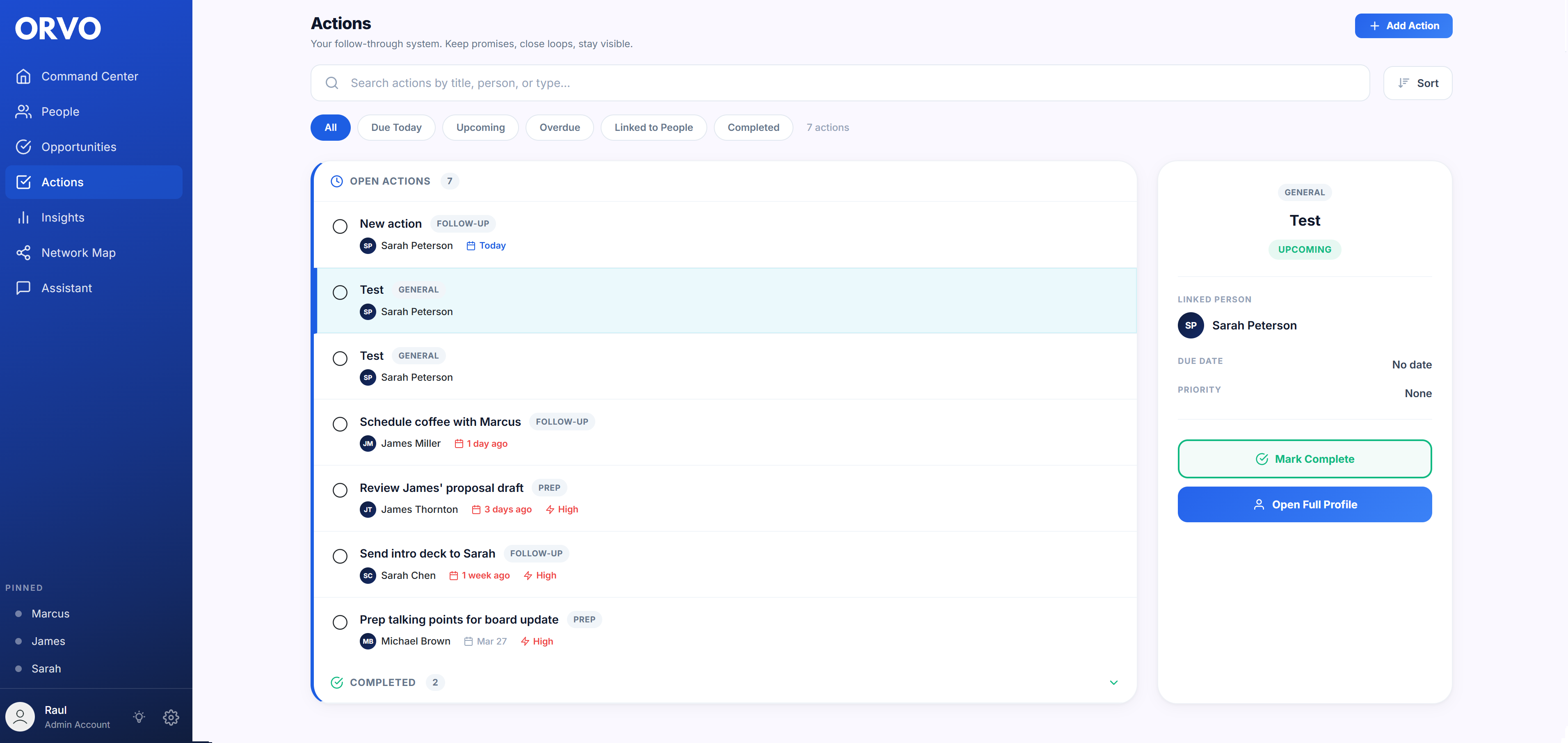
Orvo is built for exactly this kind of relationship intelligence. It syncs with your email and calendar, lets you log notes after conversations, and surfaces reminders when it is time to follow up. The AI Assistant can even help you prepare for conversations — pulling together everything you know about a person before a meeting so you walk in prepared, not scrambling.
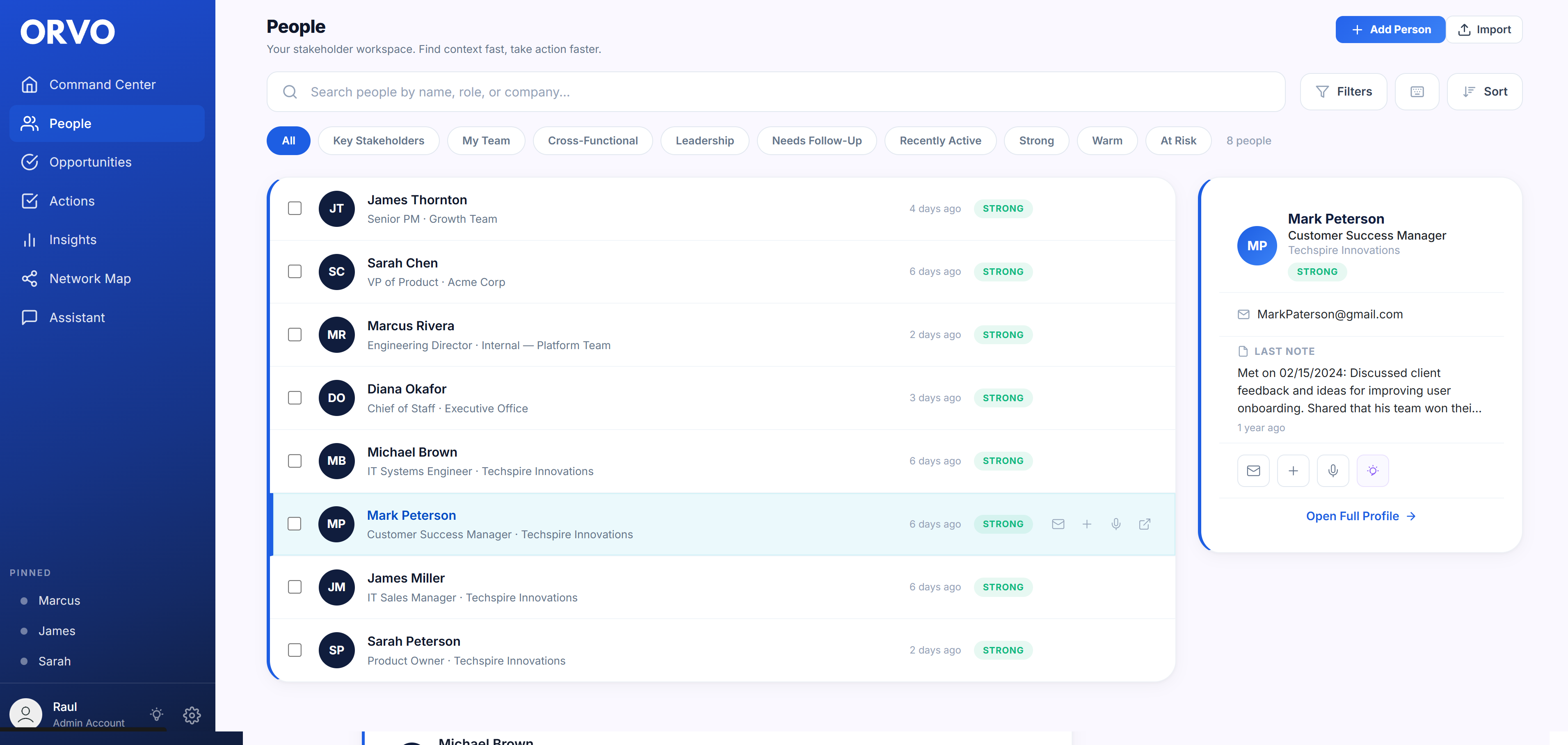
See how Orvo helps you track relationships across your job search → Start free
The 12-month playbook: phase by phase
Whether you are actively searching or building optionality for the future, this playbook works. Adjust the timeline to your situation — if you need to move faster, compress months 1-3 into weeks.
Months 1-3: Foundation
This is the research and preparation phase. You are not applying to anything yet.
- Clarify your target: What role, industry, and company type do you want? Be specific enough to focus, broad enough to have options.
- Audit your network: Who do you already know at target companies? Who knows people there? List 50 contacts who could be relevant.
- Update your LinkedIn: Your profile is your landing page. Make sure your headline, summary, and experience tell a clear story about where you are heading, not just where you have been.
- Start creating content: Share 1-2 posts per week on LinkedIn about your industry. This builds visibility with recruiters and hiring managers before you ever reach out.
- Begin informational conversations: Reach out to 3-5 people per week for 20-minute conversations. Not to ask for a job — to learn about their company, team, and what they look for in candidates.
Months 4-6: Build momentum
By now you have had 20-30 conversations and your network is expanding. This is where the compound effect kicks in.
- Deepen key relationships: Identify the 10-15 people who are most relevant to your search. Move from informational chats to genuine professional relationships — share relevant articles, offer help, stay in regular contact.
- Expand through introductions: Ask your strongest contacts for warm introductions to people at target companies. A warm intro has 5-10x the response rate of a cold outreach.
- Increase your LinkedIn presence: Share insights from your conversations (with permission), comment thoughtfully on posts from people at target companies, engage with industry content.
- Start identifying specific roles: Based on your conversations, you should now have a much clearer picture of what roles exist, what they pay, and what hiring managers look for. Begin monitoring job boards for positions at your target companies.
- Track everything systematically: By this point, you are managing relationships with 50+ people. Without a tracking system, things start falling through the cracks. Log every conversation, set follow-up dates, and review your pipeline weekly.
Months 7-9: Execute and convert
This is when your relationship investment starts paying off.
- Activate your advocates: When you see a role open at a target company, reach out to your contact there. Do not just apply online — ask if they can refer you internally. An internal referral moves your application to the top of the pile.
- Prepare using your relationship data: Before every interview, review your notes on every person you have spoken with at that company. What are their priorities? What challenges did they mention? What language do they use? Walking in with this context gives you an enormous advantage over candidates who only read the job description.
- Follow up strategically: After interviews, send personalised thank-you notes that reference specific topics discussed. Follow up with your internal advocate to ask about timeline and next steps. Keep your other contacts warm — you may need them for future rounds or backup options.
- Negotiate from strength: When offers come, your network gives you leverage. You understand the market rate from conversations with insiders. You know what the team needs. And you have the confidence that comes from knowing you were referred, not randomly selected.
Months 10-12: Close and transition
Even after accepting an offer, your relationships matter. Thank everyone who helped. Update your network on your move. The people who helped you land this role are the same people who will help you succeed in it — and who you will help in return when they need it.
Track every relationship in your job search — from first coffee chat to signed offer.
Start Free TrialHow AI is changing the job market (and why relationships matter more than ever)
The job market is undergoing its most significant transformation since the internet. AI is not just changing how we search for jobs — it is changing which jobs exist, what skills matter, and how hiring decisions are made.
As Sorin Ciornei wrote in "The Future is Now: AI's Transformation of Art, Workforce, and the Economy" (thereach.ai, 2024), we are transitioning from a Knowledge Economy to what he calls a Curating Economy. The knowledge that drove economic growth — the expertise of specialists, the judgment of managers, the creativity of knowledge workers — is now being augmented and in some cases replaced by AI. What remains uniquely human is the ability to curate, connect, and navigate complex relationships.
This has profound implications for your career:
AI tools are levelling the playing field for applications. When everyone uses ChatGPT to write perfect resumes and cover letters, those documents stop being differentiators. What still differentiates candidates is who knows them and can vouch for them. Relationships become more valuable, not less.
New roles are emerging faster than training can keep up. The jobs of 2028 do not exist in today's course catalogues. The people who will land those roles are the ones with networks that give them early visibility into emerging opportunities — people inside companies that are creating these positions.
Hiring processes are becoming more human, not less. As AI handles resume screening and initial assessments, the human elements — culture fit interviews, reference checks, team introductions — carry more weight. Your ability to build genuine rapport and demonstrate relationship skills is becoming a competitive advantage.
The professionals who thrive in this new landscape are not the ones with the longest resumes or the most certifications. They are the ones with the strongest, most intentional relationship systems — people who track their connections, maintain their networks, and can activate the right relationship at the right moment.
See the system in action
Here is a quick walkthrough of how Orvo helps you manage the relationship side of your job search — from tracking contacts and logging conversations to preparing for meetings and never missing a follow-up.
Your next job will come from someone you know. Start tracking those relationships.
Get Orvo FreeWichtige Erkenntnisse
- ✓ Up to 80% of jobs are filled through networking — invest your time accordingly
- ✓ Build relationships 6-12 months before you need them, not after you start searching
- ✓ Use a tool stack: LinkedIn for visibility, Orvo for relationship tracking, Teal for application management
- ✓ Track every conversation, follow-up, and introduction — memory does not scale past 20 contacts
- ✓ The 12-month playbook: foundation (months 1-3), momentum (4-6), execution (7-9), close (10-12)
- ✓ AI is changing applications but making relationships more valuable — the human element is your edge